Research

Science News spotlights Andrade’s work on climate-resilient crops

Science News highlighted the work of Mario Andrade, a plant geneticist at the University of Maine, who is developing climate-resilient crops such as heat-tolerant potatoes. Researchers are leveraging advanced tools like genome-assisted breeding to create crops that can withstand the impacts of climate change.

Read more

Grant renews and expands biomedical network integral to UMaine research 

To increase the faculty and research base in biomedical sciences and engineering, the University of Maine has been a research institution partner in the Maine IDeA Network of Biomedical Research Excellence (Maine INBRE) and a source of graduate students for the future of biomedical research. As a partner, UMaine biomedical faculty have also benefited from […]

Read more

A photo of an open shell

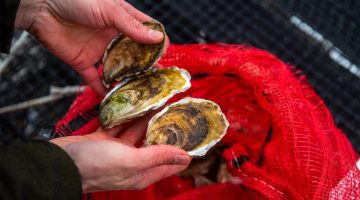
U.S. capable of achieving seafood independence, new study shows 

From lobster to haddock and seaweed, seafood plays an important role in the U.S. economy, diet and culture. The nation is one of the top producers of marine and aquatic foods worldwide, but also the second largest seafood importer. Through extensive data analysis and calculations, University of Maine researchers found the U.S. could achieve seafood […]

Read more

‘Maine Calling’ features Corey on automotive news segment

Maine Public interviewed Richard Corey, director of the VEMI Lab at the University of Maine, for a segment of its radio show “Maine Calling” on automotive news. He discussed autonomous vehicles and his team’s research into technology that can make them more accessible for seniors and people with visual impairments.

Read more

Jackson Hole News & Guide highlight tree study co-authored by McGill

Jackson Hole News & Guide reported on a study co-authored by Brian McGill, a professor of ecological modeling at the University of Maine, that reveals how trees that adapted to cold climates, like the western limber pine, may have greater heat resilience than previously thought. They compared trees’ “realized niches” in the wild with their […]

Read more

A photo of two people working in a lab

USDA backs research into making sustainable jet fuel and fish feed from wood

Millions of pounds of low-value wood, such as small diameter trees and branches, have been left behind in Maine’s forests due to the decline in pulp and paper production, stymied by drought, fire suppression and dropping demand. While there are very few existing market opportunities for this low-quality woody biomass, University of Maine researchers believe […]

Read more